
Phonics at Fellgate
Subject Lead: Mrs E. Kincaid
On this page, you can find information about our Phonics curriculum at Fellgate.
Intent:
At Fellgate Primary School, we recognise reading as a key life skill, which underpins access to the rest of the curriculum. We believe that phonics provides the foundations of learning to make the development into fluent reading and writing easier. Through daily, systematic and consistent high quality phonics teaching, children learn to segment words to support their spelling ability and blend sounds to read words. We aim for children to read words and simple sentences by the end of Reception, become successful, fluent readers by the end of Key Stage 1 and develop a lifelong love of reading as they move through school. The systematic teaching of synthetic phonics, using the Jolly Phonics programme, is given a high priority throughout Early Years and Key Stage 1. Children need to learn key phonic knowledge and develop skills in segmenting and blending to complete the phonics check at the end of Year 1 and as part of developing fluency in reading. We also value and encourage pupils to read for enjoyment and recognise that this starts with the foundations of acquiring letter sounds, segmenting and blending skills – enjoying success and gaining confidence from a positive experience. By the end of Reception, the aim is for all children to have a secure understanding of Phases 2 and 3, be able to segment and blend words within these phases as well as blend consonant clusters in Phase 4. Children are introduced to the ‘tricky words’ early in the Autumn term in Reception and aim to read and write the high frequency words for Phase 2 to 4 before they enter Year 1. The aim in Year 1 is to ensure all children have completed Phase 5 and be ready to begin Phase 6 upon entry into Year 2.
Implementation:
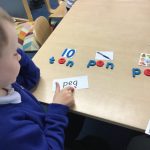
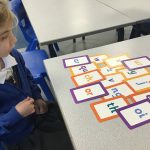
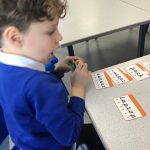
Through the teaching of phonics using the Jolly Phonics scheme, the children are taught the essential skills needed for reading. Phonics is taught daily to all children in Reception and KS1. Phonics teaching is systematic, engaging, lively and interactive.
Each phonics lesson includes the following elements:
- Revise – recap the previous graphemes and words
- Teach – introduce a new grapheme/words
- Practise – develop GPCs (grapheme phoneme correspondences)/read and spell new words
- Apply – use new graphemes/words in activities to secure knowledge
Extra support is provided to those in Year 2 (and KS2 where appropriate) who have not passed phonics screening in Year 1 and interventions are planned for those children who are working below expected levels. Staff systematically teach learners the relationship between sounds and the written spelling patterns, or graphemes, which represent them. In Reception, phonics is taught through daily whole class teaching input and small group activities. Staff ensure Phonics is an integrated part of all learning in Reception, making links across the Early Years Curriculum as children explore the environment. In Year 1 and Year 2 phonics is taught though a whole class teaching input. Where extra intervention is necessary, this is provided for children throughout Key Stage 1 and 2. Pupils have regular reading sessions with an adult to ensure they are regularly practising and applying their phonics knowledge to enable them to meet age related expectations. In the EYFS the continuous provision matches children’s current knowledge and understanding whilst ensuring the children are suitably challenged. Teachers regularly assess children’s phonics knowledge using an online phonics tracking system. These regular assessments inform planning and allow teachers to identify any gaps in learning. Children have phonically decodable reading books matched to their phonics knowledge which they are encouraged to read regularly at home to ensure fluency in reading is developed. Books are chosen from our reading scheme- Project X Alien Adventures.
Impact:
As a result of high quality phonics provision, children make good progress from their starting points. The vast majority are ready for the next stage in their education as they transfer through Early Years, Key Stage 1 and into Key Stage 2. Children enjoy listening to adults read and develop a love of reading, gaining satisfaction from their growing success in developing independence and fluency. We firmly believe that reading is the key to all learning and so the impact of our phonics and reading curriculum goes beyond the results of the statutory assessments and can be seen in success across the curriculum as children progress through school.
Inclusion and Equal Opportunities:
Our curriculum is fully inclusive and all children can succeed in Phonics. Where necessary, adjustments are made to the delivery of lessons to enable all learners to make progress, including the delivery of interventions to address misconceptions and gaps in learning. We support ranging needs, celebrate cultural diversity and make learning relevant through linking content to the context of our school and children.
Subject Mantra:
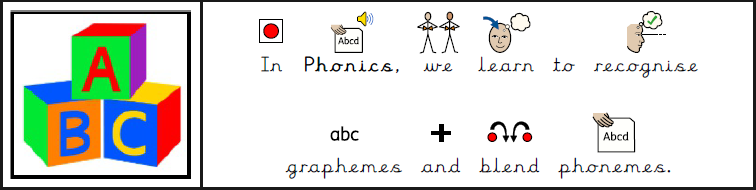
We use subject mantras to develop our children’s understanding of the subjects they are learning. They also help our children make connections and develop their long term memory.

Here, you can find out about our Phonics Policy that will tell you more about the subject and how it is taught, monitored and assessed across the school.
Long Term Plan: